The Universitat Politècnica de València has led the development of the Foundations of the Comprehensive Regeneration Strategy for Rural Areas Affected by the 2024 Floods in the Metropolitan Area of Valencia, a project aimed at rebuilding a far more resilient territory, with high social and environmental quality and a strong productive fabric, optimally connected to its heritage, land and natural and cultural values, capable of activating its full potential and properly prepared for emergencies.
During the presentation, the Rector of UPV, José Capilla, stated that the 2024 DANA was not only a meteorological catastrophe but also a symptom of an exhausted territorial model. “This is not just about rebuilding what existed. We must rethink how we occupy and manage the territory and how we prepare it for events that we know will happen again,” he said.
He explained that the UPV-led strategy proposes a structural transformation based on five major pillars: reducing risk through intelligent hydraulic design; reconfiguring the territory through green infrastructure; overcoming metropolitan fragmentation; integrating agriculture, mobility, heritage and resilience; and ensuring maintenance and coordinated governance among public administrations.
José Capilla recalled that the Valencian territory has historically been shaped by successive floods and that extreme events will occur again. He therefore stressed the need to update hydraulic infrastructures, strengthen monitoring and early warning systems, and improve territorial planning based on anticipation and prevention.
The Rector underlined that resilience is not only a technical issue but also a cultural one. He highlighted the importance of strengthening education and a culture of self-protection from an early age, so that citizens understand the territory in which they live and know how to respond in emergencies.
He also emphasised the response of the university community following the 2024 floods. UPV mobilised from day one, first through volunteer work in affected municipalities and later by deploying experts in architecture, engineering and hydraulic modelling to assess structures, analyse flows and support recovery efforts.
José Capilla concluded that the project does not propose mere reconstruction but rather a reprogramming of the territory. “We must use this experience to build a far more resilient territory and significantly reduce the impact of future emergencies,” he stated.
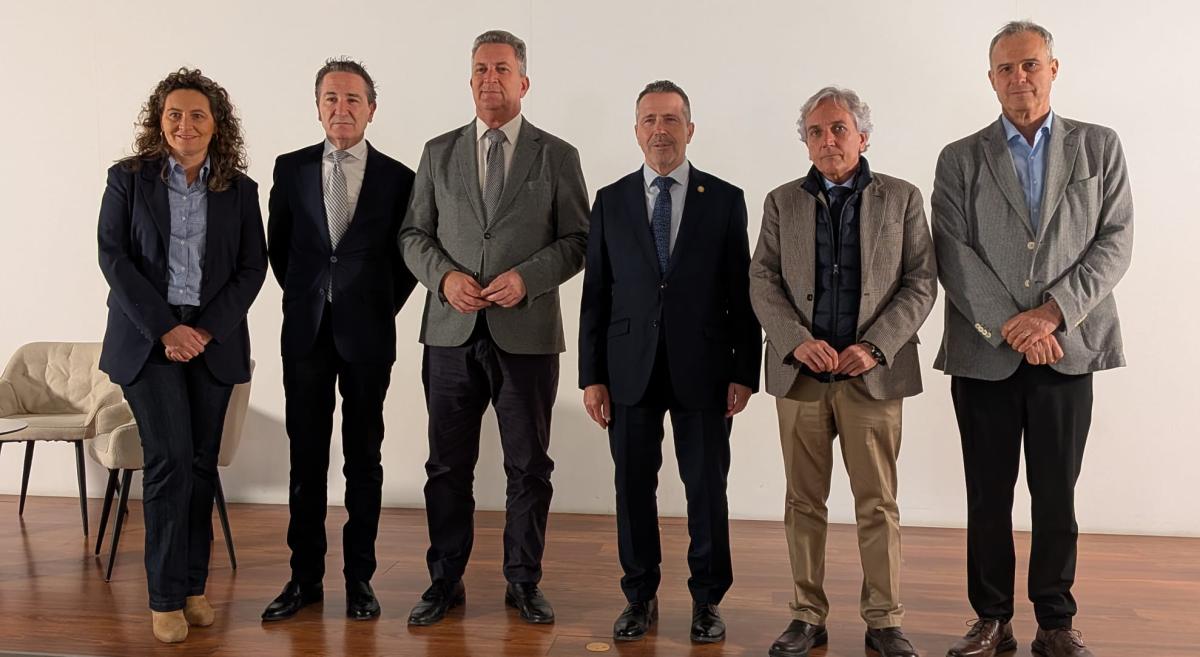
The event was attended by the Third Vice-President and Regional Minister for Environment, Infrastructure, Territory and Recovery, Vicente Martínez Mus, as well as the Commissioner for Recovery, Raúl Mérida; the Regional Secretary for Environment and Territory, Sabina Goretti Galindo; the Director General for Urban Planning, Landscape and Environmental Assessment, Miguel Ángel Ivorra; the Director General for Quality and Environmental Education, Jorge Blanco; the Director General for Recovery and Reconstruction, Sandra Castillo; and the Coordinator of the Floodable Parks Network, Vicente Dómine.
The Strategy was presented by Paco Vallés, UPV engineer; Samira Khodayar, CEAM; Fernando Buchón, UPV cartography specialist; Tomás Ruiz, UPV transport infrastructure expert; and Eduardo Rojas, UPV forestry engineer.